2 Days in Munich: Your Complete Itinerary
If you’re trying to figure out how to spend 2 days in Munich, you’re in the right place. I visited recently and spent my time with friends who live in the city, which meant I wasn’t guessing about what to include or how long things actually take. We walked the classic Old Town loop, timed the route through the Residenz, crossed the English Garden more than once, and compared the exact options travelers debate the most.
What I learned is simple. Munich works best when you follow a realistic sequence. Some sights are closer than you expect, some take longer, and a few popular recommendations only make sense if you understand the timing. This guide uses the same structure I followed, built from real on-the-ground experience and local advice, so you know exactly what you can fit into one, two, or three days without rushing.
If you want a plan that feels smooth, makes sense geographically, and reflects how Munich actually moves, this itinerary will give you a clear path through the city.

Is 2 Days in Munich Enough?
Yes, two days is enough to get a real feel for Munich. You won’t see everything, but you can experience the heart of the city without rushing if you keep your plans focused. Munich is compact, the main sights sit close together, and the routes between them make sense once you understand the layout.
The catch is depth. Two days gives you a strong first impression, not a full deep dive. Some museums are bigger than they look, Neuschwanstein takes a full day, and a few “quick stops” can easily turn into long detours. That’s why so many people end up wishing they had an extra day once they arrive.
If your goal is to see the highlights, enjoy the atmosphere, and leave with a good sense of what Munich is about, two days works well.

How to Use This Munich Itinerary
I travel a lot and spent several days in Munich in 2025, staying with friends who live in the city. This itinerary follows the routes and timings that actually worked on the ground, laid out so you can match it to the time you have.
If you only have 1 day:
• Follow the essential loop through the Old Town, the Residenz, the English Garden, and a classic beer hall.
• This gives you Munich’s core without rushing.
If you have 2 days:
• Use Day One for the essentials.
• For Day Two, pick one of two clear paths:
• Option A: A full day trip to Neuschwanstein
• Option B: A deeper day inside Munich with Nymphenburg, Olympiapark, and BMW Welt
If you have 3 days:
• Follow the 2 day plan, then choose one of two realistic third day options:
• Option A: Dachau in the morning with a relaxed afternoon
• Option B: A museum morning and a neighborhood walk
Use the sections below to jump straight to the plan you want. Each day is organized in the order that makes the most sense once you’re on the ground.
1 Day in Munich: The Essential Itinerary
If you’re trying to figure out whether you can see Munich in one day, the short answer is yes. You won’t cover everything, but you can experience the heart of the city with the right route. Most first-timers want to see the Old Town, the Residenz, the English Garden, and still have time for a proper beer hall. The good news is that you can do all of that in a single day.
Your one day at a glance:
Start in Marienplatz and the Old Town
• Explore the Munich Residenz
• Stop for a quick lunch at Viktualienmarkt
• Walk through the English Garden and see the Eisbach surfers
• Finish with a classic beer hall dinner
This one day itinerary is built around what actually fits. It balances history, green space, and food without rushing, and it gives you a clear path through the places that define Munich’s identity. If you’ve only got one day, this is the structure that makes the most sense on the ground.
Marienplatz and the Old Town
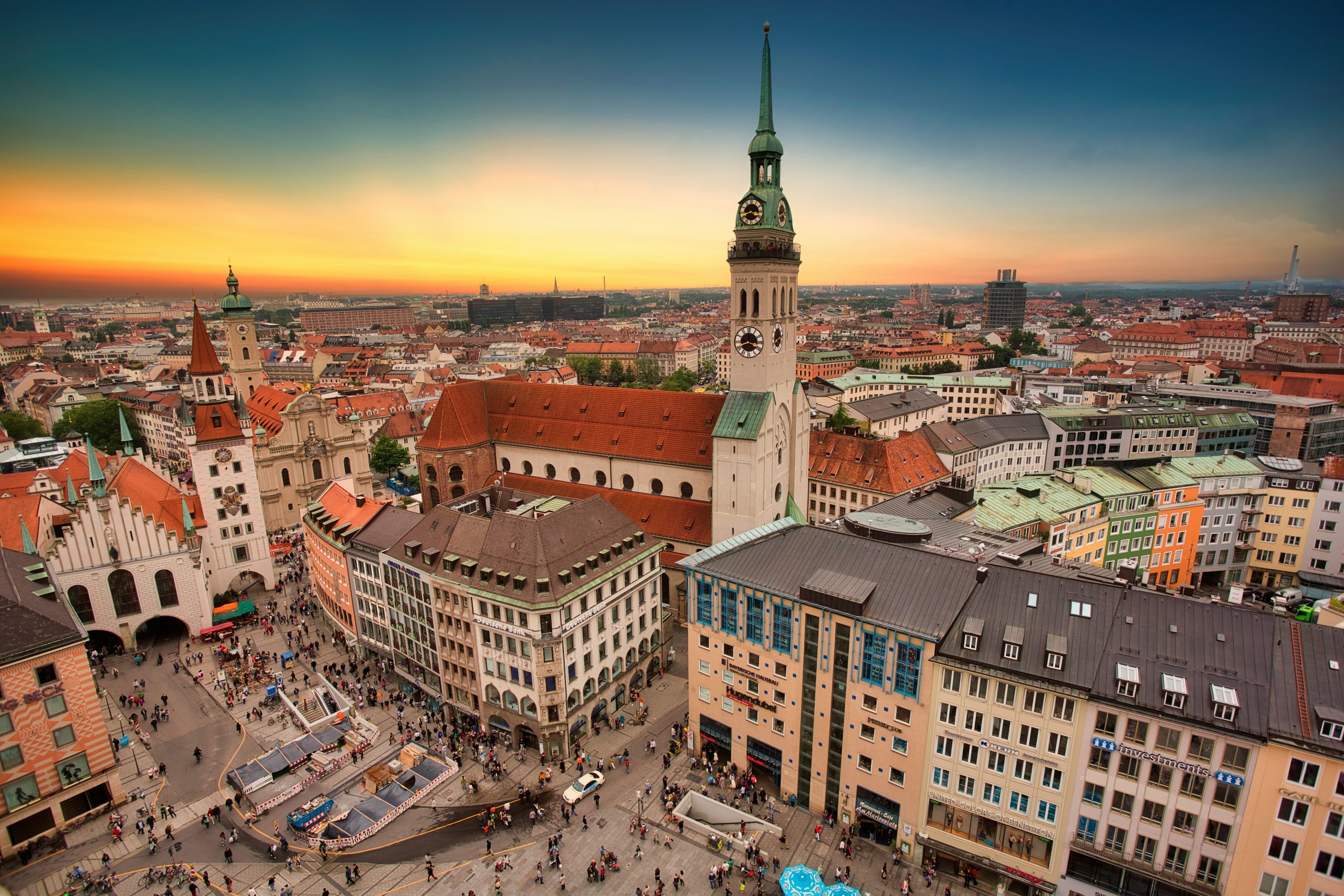
Start your day in Marienplatz, the center of Munich’s Old Town. With the Neues Rathaus on one side and narrow medieval streets on the other, it gives you a quick feel for the city the moment you arrive. Most travelers begin here because it orients you instantly. If you happen to catch the Glockenspiel, great, but it’s not worth timing your whole morning around.
From Marienplatz, walk toward Frauenkirche and follow the small lanes that connect the Old Town. This area is compact, easy to navigate, and perfect for a one day visit.

Munich Residenz
The Munich Residenz is just a short walk from the Old Town and one of the most efficient ways to experience Bavaria’s royal history on a tight schedule. The complex is huge, but you don’t need to see everything to get real value from it.
It also balances the day nicely since it’s an indoor stop, especially if the weather turns. You’ll get a clear look at Bavarian history and design, and you’ll finish right on the natural route toward Viktualienmarkt, keeping the flow of the day smooth and logical.

Viktualienmarkt Lunch
By midday, Viktualienmarkt is the easiest place for a quick local lunch. The market is full of food stalls, bakeries, and butcher counters, so you can grab something fresh without committing to a long restaurant stop. When I visited, I sampled a few stands and liked how fast and flexible it was. Prices vary, so walking a quick loop before choosing helps.
English Garden and the Eisbach Surfers
After lunch, walk to the English Garden, one of Europe’s largest urban parks and an essential stop on a short visit. The quickest route takes you straight to the Eisbach wave, where surfers ride a standing river wave year-round. If you want more background on how the wave formed and why it became so iconic, the official Munich tourism page explains it clearly

Beer Hall Dinner
A classic beer hall is the ideal way to finish a one day visit to Munich. Hofbräuhaus is the famous choice, lively and easy to enjoy if it’s your first time in the city. If you want something more local and less crowded, Augustiner is the better option. Both serve hearty Bavarian dishes, and both offer the kind of atmosphere people associate with Munich.

2 Days in Munich: Two Ways to Spend Day 2
If you’re planning a two day Munich itinerary, this is where your plan branches. Day One already gives you the core loop through the Old Town, the Residenz, the English Garden, and a classic beer hall. With those essentials covered, you can shape your second day around the type of experience you want.
Your two days at a glance:
• Day One: Follow the essential loop in the 1 Day in Munich itinerary
• Day Two – Option A: Take a full day trip to Neuschwanstein, Germany’s most famous castle
• Day Two – Option B: Stay in Munich for Nymphenburg Palace, Olympiapark, and BMW Welt
Both paths work well, but they create completely different days. After testing the routes myself, I found that choosing early keeps everything running smoothly. Below are the two versions that make the most sense in real conditions.

Option A – Neuschwanstein Day Trip
If you want the postcard view, Neuschwanstein is the classic second day choice. It’s a full day trip, so plan for the timing. The train to Füssen takes about two hours, and once you arrive, you’ll walk uphill, take the shuttle, or use a carriage to reach the castle. The climb takes longer than it looks, and during my visit the biggest surprise was how much time disappears between getting off the train, moving through the village, and reaching the main viewpoint.
The interior tour is short but structured, and tickets are timed, so booking ahead is essential. The real highlight is Marienbrücke, where you get the famous panoramic photo. Even if you’re not usually a “fairytale castle” person, the view delivers when the weather is clear.
Where travelers go wrong is assuming this is a half day outing. It isn’t. Once you factor in the train ride, the walk up, the tour, the viewpoints, and the return to Munich, the entire day is gone. With the right expectations, though, it’s a memorable and well paced trip that fits naturally into a two day itinerary.
Choose this option if you want the iconic experience and don’t mind committing the full day to it. If you’d rather stay inside Munich, the next option gives you a smoother, more flexible in city day.

Option B: Nymphenburg + Olympiapark + BMW Welt
If you’d rather stay inside Munich, this option gives you a relaxed, varied second day with no long travel times. It’s ideal if you want a mix of history, architecture, and green space without leaving the city.
Who should choose this option
Choose this in-city day if you want:
• More variety and smoother pacing
• Less time on trains
• A deeper feel for Munich’s everyday rhythm
• A flexible day that works in mixed weather
• A lighter alternative to the full Neuschwanstein trip
Stop 1: Nymphenburg Palace
Nymphenburg is one of the best major sights you can visit without leaving Munich. It fits perfectly into a two day itinerary because you can adjust how long you spend inside and on the grounds.
Why it works well:
• Impressive interiors without overwhelming your schedule
• Huge, calm gardens that are easy to walk
• A quieter change of pace compared to the Old Town
• Simple transit connections
Quick ideas:
• Start with the central axis for the classic view
• Visit a pavilion if you’ve got extra time
• Wander the gardens for a peaceful break
My friends recommended this stop to me, and it became one of the most relaxing parts of my visit.

Stop 2: Olympiapark
From Nymphenburg, head to Olympiapark for a complete shift in atmosphere.
Why it’s worth visiting:
• Iconic sweeping rooflines
• Easy lake paths and open spaces
Quick ideas:
• Walk a short loop around the lake
• Climb the hill for a photo

Stop 3: BMW Welt
BMW Welt sits right next to Olympiapark, which makes it an effortless final stop.
Why it rounds out the day well:
• Free entry
• Quick to explore (30–60 minutes)
• Interesting even if you’re not into cars
This stop keeps the day flexible, which is one of the biggest benefits of staying inside Munich.

3 Days in Munich: Add History or Culture
If you’ve got three days in Munich, this final day lets you go deeper. Days One and Two already give you the essential sights and your preferred version of the second day. Day Three is about choosing the kind of experience you want next, whether that’s an important historical site or a slower cultural day inside the city.
Your three days at a glance:
• Day One: Follow the essential loop in the 1 Day in Munich itinerary
• Day Two: Choose your preferred version in the 2 Days in Munich section
• Day Three – Option A: Visit Dachau in the morning, then enjoy a calm afternoon in a green space
• Day Three – Option B: Start with a museum and finish with a neighborhood walk and cafés
Below are the two third-day routes that make sense in real conditions.
Option A – Dachau + Easy Afternoon
A third day in Munich is the perfect time to visit the Dachau Concentration Camp Memorial Site. It’s one of the most important historical places near the city, and going in the morning gives you the space and quiet needed to take it in properly.
Why Dachau fits Day Three:
• It requires focus and emotional energy
• The visit is structured but not rushed
• Transit from Munich is straightforward
What to expect:
• A self-guided route through the grounds and main exhibition
• Audio guides available if you want more context
• A minimum of 2–3 hours on site

After returning to Munich, choose a gentle, open space to decompress. The city has plenty of quiet corners that balance the emotional weight of the morning.
Good afternoon reset options:
• English Garden: open lawns, peaceful walking paths
• Hirschgarten: huge beer garden with a relaxed local feel
• Isar River walk: calm, wide paths along the water
• Maxvorstadt cafés: quiet spots to sit, read, or journal
This option is best if you want a meaningful, reflective day paired with a slower afternoon. It balances history with space, giving you a thoughtful end to your three day Munich itinerary.
Option B – Museum Morning + Neighborhood Walk
If you’d rather keep your third day lighter and more cultural, spend the morning at one of Munich’s major museums and the afternoon exploring one of its liveliest neighborhoods. This version feels slower, more local, and perfect for travelers who want to see more of the city’s everyday rhythm.
Best museum options:
• Deutsches Museum: perfect for tech-minded travelers, huge but fascinating
• Pinakothek der Moderne: art, design, and architecture in one place
• Alte Pinakothek: European masters if you prefer classics
• Sunday tip: many Pinakothek museums drop to 1 EUR on Sundays
Spend around 1.5–2 hours in your chosen museum so you have time for the second half of the day.

Best afternoon ideas:
• Walk the Isar River paths: locals love this, especially on sunny days
• Kleinhesseloher See beer garden: peaceful, scenic, and relaxed
• Cafés in Maxvorstadt: great for a slow afternoon
• Glockenbachviertel: stylish shops and a strong local feel
Extra Things to Do in Munich
If you end up with a little extra time, these are the add-ons that actually fit a 1–3 day trip. They’re easy to reach, they don’t overlap with the main itinerary, and they highlight the parts of Munich that locals enjoy most.
Parks and Outdoor Spaces
• Westpark for lakes and quiet walking paths
• Luitpoldpark viewpoints and open hills
• Gärtnerplatz area for evening people watching
Viewpoints and Architecture
• Theatine Church interior
• Angel of Peace monument
• Maximilianeum terraces
Museums and Cultural Stops
• Lenbachhaus for Blue Rider artists
• Museum Brandhorst for contemporary art
• Glyptothek for a calmer, sculpture-focused visit
• NS Documentation Center for 20th century history
Markets, Food, and Local Stops
• Elisabethmarkt in Schwabing
• Schrannenhalle for easy snacks
• Local Konditorei cakes and pastries
• Traditional Weißwurst breakfast at a Wirtshaus
Neighborhood Wandering
• Schwabing cafés and boutiques
• Haidhausen’s quiet streets and courtyard bars
• Glockenbachviertel design stores
• Maxvorstadt galleries and bookstores
Where to Stay in Munich
Choosing the right neighborhood matters more in Munich than most people expect. Distances look small on the map, but certain areas make sightseeing far easier, especially if you only have one to three days. Here’s a practical breakdown based on how you like to travel.
Old Town (Altstadt–Lehel): Best for first timers
Stay here if you want to walk everywhere and keep logistics simple. You’re close to Marienplatz, the Residenz, Viktualienmarkt, and quick transit links. It’s busy and pricier, but nothing beats this location for a short trip.

Maxvorstadt: Best for cafés, museums, and a young local feel
Munich’s university district is full of galleries, bookstores, and coffee shops, with easy access to the Pinakothek museums. If you want personality without sacrificing convenience, this area strikes a great balance. I found it one of the best neighborhoods for relaxed evening walks.
Budget Friendly Options
For better value, look near Hauptbahnhof, Schwabing, or Giesing. These areas offer fast transit and lower prices than the Old Town. They’re not as scenic, but for short trips the tradeoff usually works.
Getting Around Munich
Munich is one of the easiest cities to navigate, and during my visit I relied almost entirely on public transport and walking. It worked perfectly. The MVV network (U-Bahn, S-Bahn, trams, and buses) covers every major sight, and Google Maps handled real-time directions without a single issue. If you want official route maps or fare details, the MVV website provides a clear breakdown.
Tickets and Zones
• Most short trips only require Zone M, which covers the full city center
• For busy sightseeing days, the Zone M day ticket or Group day ticket offers the best value
• If you’re visiting Neuschwanstein, buy a regional train ticket to Füssen instead of an MVV pass

Walking and Distance Awareness
Munich is walkable, but distances can feel longer than they look. The English Garden especially is huge, and it’s easy to underestimate how long it takes to cross. I learned this the hard way on my first day, so pace your walking and give yourself margin when connecting stops.
Driving and Payments
• Avoid driving unless absolutely necessary; parking is limited and expensive
• Cards are widely accepted, though a few traditional Wirtshäuser and bakeries still prefer cash
• Taxis and rideshares exist, but public transit is usually faster and cheaper
Public transport is reliable, clean, and simple, which makes getting around Munich one of the least stressful parts of planning your trip.
If you’re continuing deeper into Bavaria or want to see the Alps, Innsbruck is only about two hours away by bus, and I’ve written a full guide you can use to plan that trip.
My Final Advice for Planning 1–3 Days in Munich
Whether you’re planning 2 days in Munich or stretching your visit to three, the benefit of this itinerary is how simple it keeps the trip. After spending time in the city myself and testing these routes, I found that Munich works best with a clear plan: start with the essentials on Day One, choose the version of Day Two that matches your pace, and let Day Three add either history or a slower cultural day.
Munich’s compact layout and reliable transit make short trips easier than they seem on paper, and following this structure helps you cover the city’s defining sights without feeling rushed. The goal is to give you a realistic, usable framework that fits actual travel conditions, not an overstuffed checklist.
If you’re continuing your trip afterward, you can explore more of the region through my Austria travel hub, which is the best place to find onward inspiration and plan your next steps.

FAQ for Planning Your 2 Days in Munich (Plus 1- and 3-Day Variations)
Is two days in Munich enough?
Yes. Two days lets you see Munich’s main sights if you follow a focused plan. You can cover the Old Town, the Residenz, Viktualienmarkt, the English Garden, and either Neuschwanstein or Nymphenburg.
What’s the best way to spend one day in Munich?
Follow the essential loop: Old Town, the Munich Residenz, Viktualienmarkt, the English Garden, and a beer hall at night.
Should I visit Neuschwanstein on a short trip?
Only if you’re ready to spend the entire day on it. The roundtrip, uphill walk, and timed entry make it a full day commitment. Otherwise, Nymphenburg is the better in-city option.
What’s the best area to stay for a short visit?
Old Town is the easiest for logistics. Maxvorstadt works well if you prefer cafés and museums. Staying farther out saves money but adds commute time, which isn’t ideal on short trips.
How easy is it to get around Munich?
Very easy. MVV trains and trams are frequent, and Google Maps worked perfectly during my visit. The English Garden is bigger than it looks, so give yourself time when walking across it.
What should I add if I have a third day?
Choose one focus: either visit Dachau in the morning and take a slow afternoon, or pick a museum and explore a neighborhood like Maxvorstadt or the Isar riverfront.